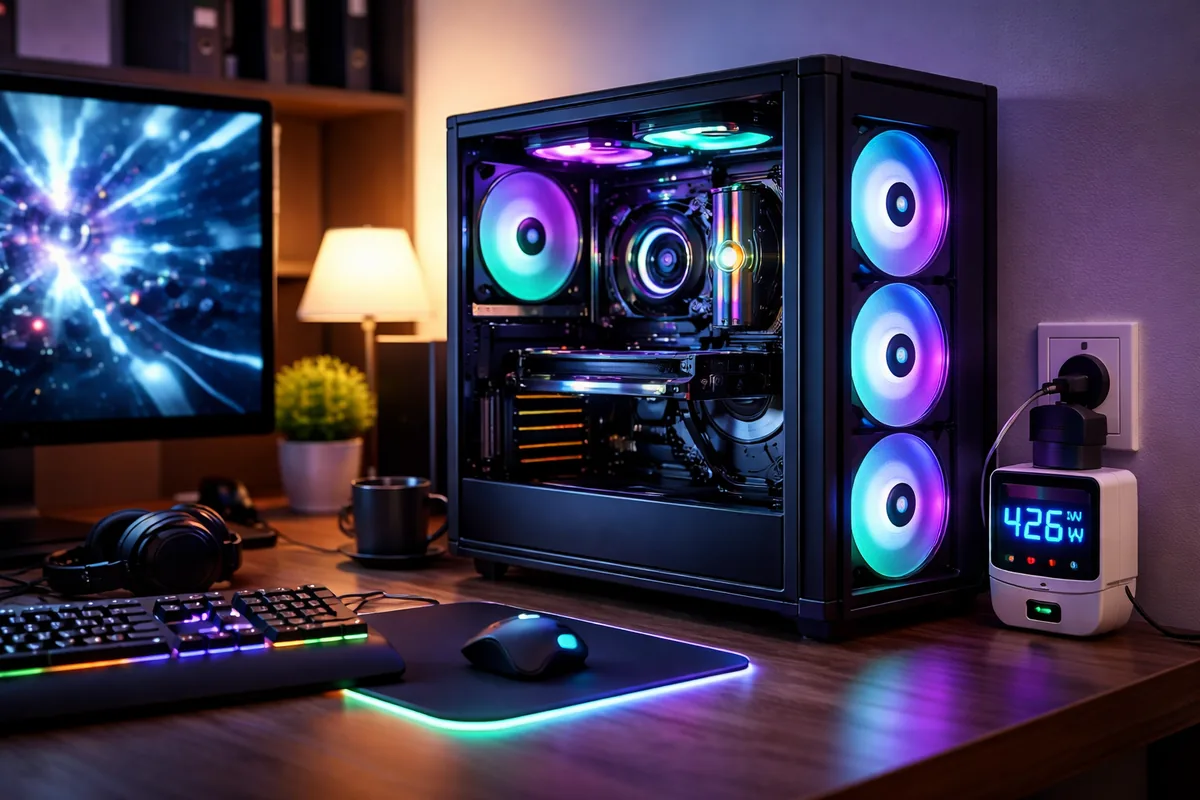
The power consumption of a gaming PC varies significantly based on several factors, including hardware specifications, usage patterns, and settings. On average, a gaming PC can consume between 300 to 600 watts during active gaming sessions, depending on the components used and the complexity of the games being played.
Factors influencing power consumption
Several factors can significantly impact how much power a gaming PC consumes. These include the type and number of components, the performance settings of games, and how efficiently the system operates.
Hardware specifications
The individual components of a gaming PC play a crucial role in overall power consumption. The graphics card is generally the most power-hungry part of a gaming setup. High-end GPUs can draw anywhere between 200 to 400 watts under load. Processors also contribute, especially high-performance models that can reach around 100 watts or more. Other components such as cooling systems, storage devices, and peripherals (like monitors and RGB lighting) also add to the total consumption, albeit to a lesser extent.
Usage patterns
The way a gaming PC is used will also affect its power consumption. For instance, running resource-intensive games or applications will naturally increase power draw compared to less demanding tasks like web browsing or word processing. Additionally, setting graphics modes to high detail can significantly spike a PC's power usage, while lower settings will conserve energy. Users can monitor individual component consumption using tools that provide real-time wattage data.
Measuring power consumption
To accurately gauge total power consumption, gaming PC owners can employ various methods. One effective approach is to use a kill-a-watt meter, which plugs into the wall outlet and measures the wattage being consumed by the PC during operation.
Setting up a power measurement tool
Installing a power measurement device is straightforward. The user should plug the device into a wall socket and then connect their gaming PC's power supply to the meter. By running games or demanding applications, users can record the power draw, giving them an accurate picture of their system's consumption under different loads.
Calculating power costs
Understanding power usage isn't just about wattage; calculating the cost of running a gaming PC is also essential. This is often done by assessing the wattage consumed, the number of hours the PC is in use, and local electricity rates. The formula is as follows:
| Wattage (W) | Hours of use (h) | Cost per kWh ($) | Monthly cost ($) |
|---|---|---|---|
| 500 | 5 | 0.12 | 9.00 |
In this scenario, if a gaming PC consumes 500 watts and is used for five hours a day, the monthly cost can reach a total of around $9, assuming a rate of $0.12 per kWh.
Power-saving strategies
Gamers looking to reduce their gaming PC's power consumption should consider several strategies:
Upgrading components
Some hardware components are more energy-efficient than others. Gamers might consider upgrading to modern, power-efficient graphics cards or CPUs that offer better performance per watt. Researching energy-efficient models can lead to significant savings over time.
Using power management settings
Gaming PCs come equipped with various power management options in their BIOS settings. Adjusting these settings allows users to strike a balance between performance and power savings. Features like sleep mode can dramatically reduce power draw when the PC is idle.
Hardware monitoring software
The use of hardware monitoring software can provide insights into real-time power consumption and facilitate adjustments based on usage. This software can help gamers optimize performance settings based on current load, maintaining better efficiency.
Environmental considerations
Power consumption has broader implications, especially concerning environmental sustainability. Reducing energy usage can minimize carbon footprints, encourage the use of renewable energy sources, and reduce energy bills. Gamers can be proactive in sustainability by investing in energy-efficient systems and being mindful of their gaming habits.
FAQ
What is the average power consumption of a gaming PC?
The average power consumption of a gaming PC ranges from 300 to 600 watts during gaming sessions, depending on the components and usage.
How can I measure the power consumption of my gaming PC?
You can measure your gaming PC's power consumption using a kill-a-watt meter, which tracks the wattage from the outlet during use.
What factors affect the power consumption of a gaming PC?
Factors include the types of components, usage patterns, gaming settings, and the efficiency of the power supply used in the PC.
Can upgrading my GPU help reduce power consumption?
Yes, modern GPUs often offer better performance per watt than older models, which can help reduce overall power consumption.
How can I calculate the monthly cost of running my gaming PC?
Multiply the wattage by the number of hours used per month, divide by 1000 to get kWh, and then multiply by your local cost per kWh.

Jordan Riley
Tech writerJordan is passionate about demystifying technology for everyday users. She enjoys writing about the latest trends in computing.